

Fisher & Paykel Nova Nasal
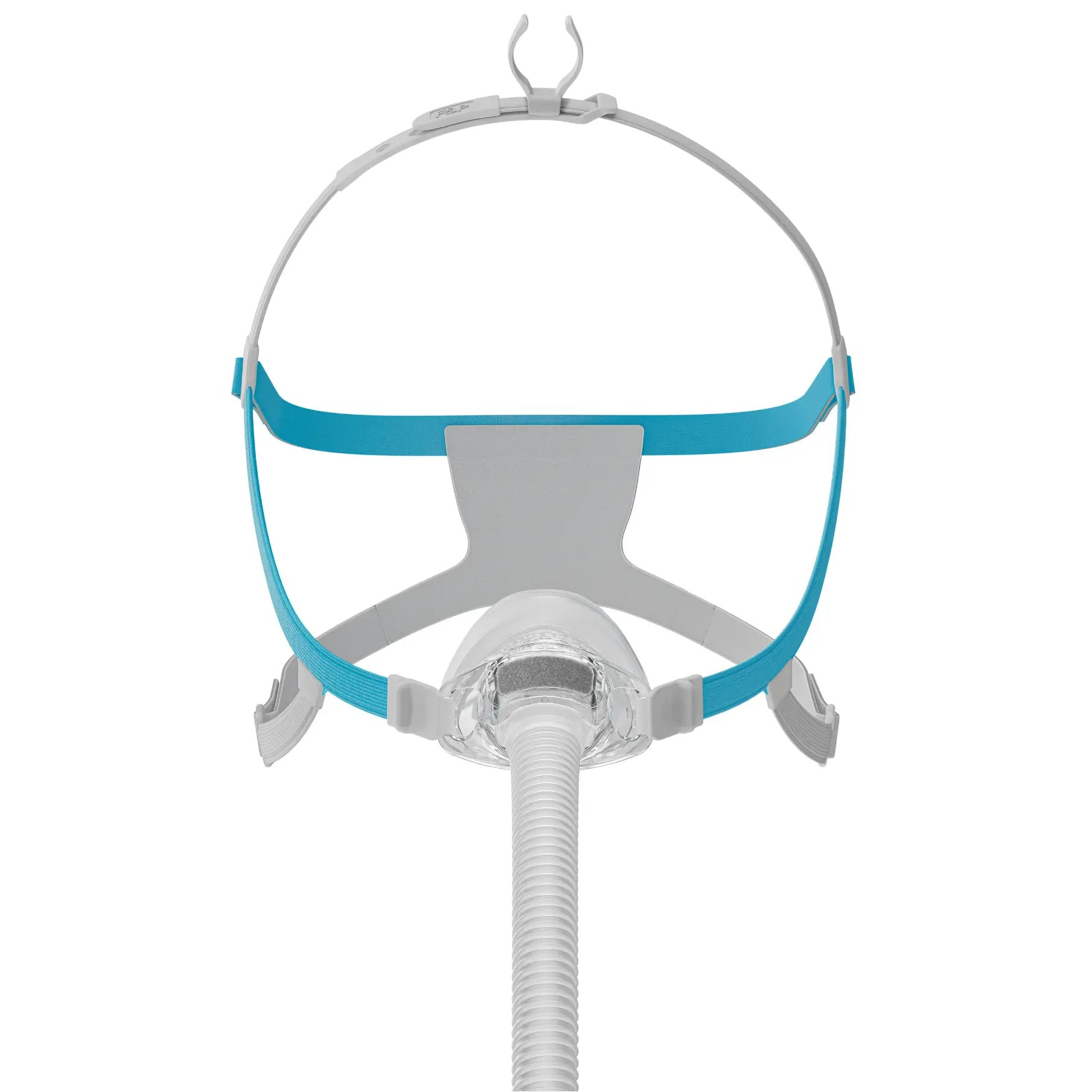
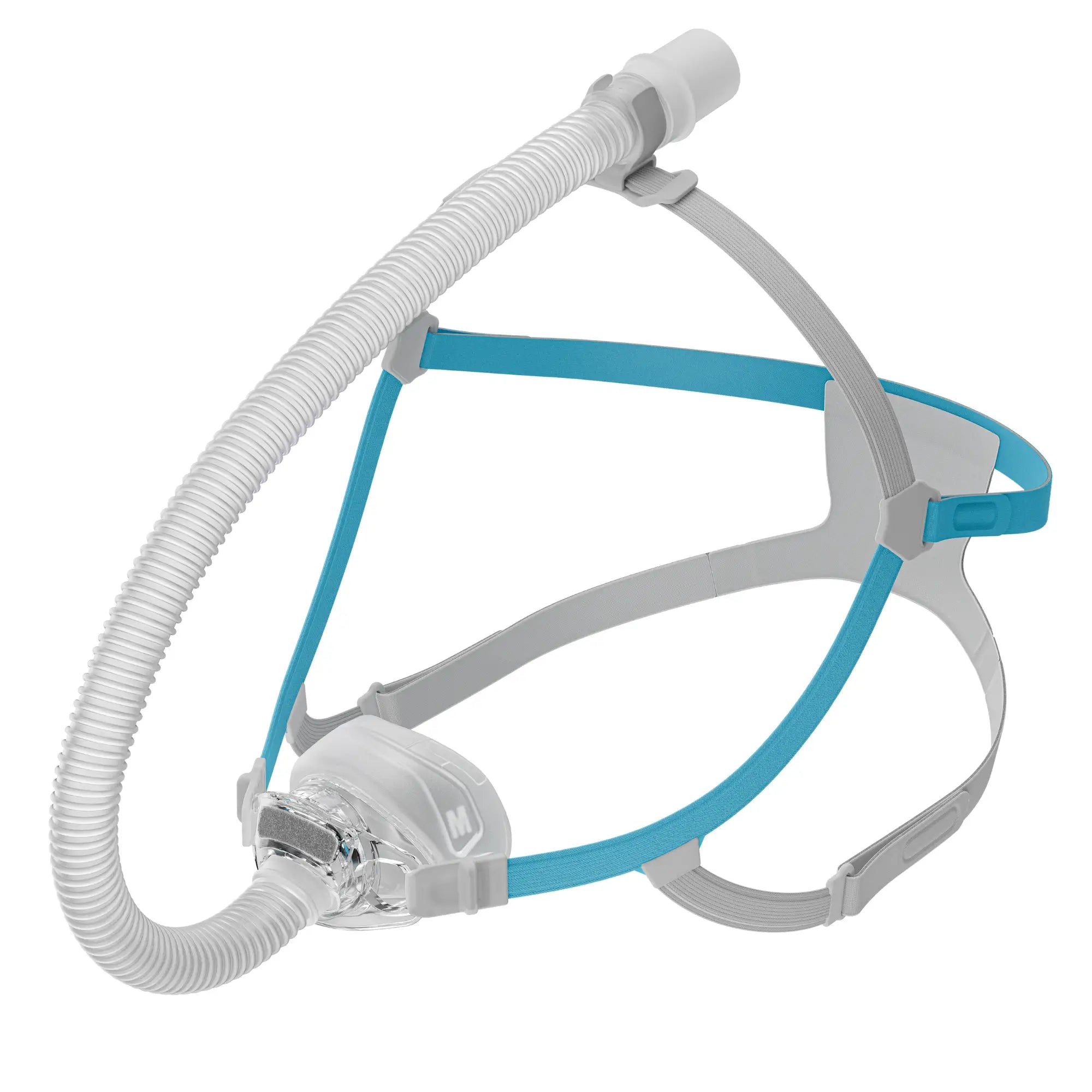
An over-the-nose nasal mask with a RollFit cushion that rolls with your face as you move and soft AirEdge stability arms that leave fewer marks.
Request this product- RollFit cushion: sits lower on the nose bridge and rolls with your face as you move, holding the seal on your back or side without cranking the straps tight.
- AirEdge stability arms: soft fabric spreads pressure across the cheeks instead of concentrating it, cutting down on red marks and irritation.
- SwingFit headgear: pivoting clips click in with one motion for easy on and off.
- Flexible tube routing: a tube clip lets you route the hose over your head or down the front, whichever suits how you sleep.
- Open field of view: the low cushion and slim frame keep your sightline clear for reading, TV, or glasses.
- Magnet free: no magnets anywhere in the frame or headgear.
- Mask type: Nasal (over the nose)
- Cushion: RollFit, silicone and polycarbonate, sizes Small, Medium, Large
- Headgear: SwingFit with pivoting clips, sizes Small and Medium-Large
- Diffuser: Washable, optional to use
- Sound level: 17.5 dBA sound pressure with diffuser
- Therapy pressure range: 4 to 30 cmH2O
- Materials: Latex free and DEHP free
- Magnets: None
- Compatibility: CPAP, APAP, and BiPAP machines with a standard 22 mm connector (AirMini requires a separate adapter)
- HCPCS codes: A7034 (mask), A7035 (headgear)
- Prescription required: Yes
Who it suits
A quick overview of this machine and who it works best for.

Good fit for:
- Nose breathers who want a secure seal without overtightened straps
- Patients with sensitive skin who get red marks from rigid mask frames
- Back and side sleepers, since the cushion rolls with movement
- Patients with a pacemaker or other implant who need a magnet-free mask
- Patients who wear glasses, read, or watch TV before sleep

Not a good fit for:
- Patients who breathe through their mouth during sleep, unless paired with a chin strap
- Patients who prefer an under-nose pillow style (consider the Nova Micro)
- ResMed AirMini travelers who want a native connection without an adapter
Setup video
A quick overview of this machine and who it works best for.
How to get it?
Upload your prescription
Add it at checkout, or have your sleep clinic fax it to us directly.

We verify with your insurer
Our team checks your coverage and lets you know your out-of-pocket cost.

Your machine ships
Delivered in 3–5 business days, with setup support included.

Compatible masks
Quick answers
What types of CPAP masks do you carry?
We carry all three major CPAP mask styles: full face, nasal, and pillow masks. Each fits differently, and the right choice depends on how you breathe, your pressure setting, and your comfort preferences. Our respiratory team can help you pick and fit the right one.
What is a CPAP machine?
A CPAP machine treats sleep apnea by delivering a constant flow of positive airway pressure to your throat, keeping your airway open during sleep. This prevents the pauses in breathing that define sleep apnea. Consistent CPAP therapy typically improves energy, alertness, and overall wellbeing.
What are the different types of CPAP masks and how do they differ?
There are three main mask styles for sleep apnea therapy, each suited to different sleepers:
Full Face Masks
Cover both nose and mouth. Recommended for mouth-breathers, people with allergies or nasal congestion, sleepers prescribed higher pressure, or anyone who moves a lot at night.
Nasal Masks
Cover just the nose. Lighter than full face with a secure cushion seal. Good for people who feel claustrophobic, want a clear field of vision for reading or TV, or have facial hair that interferes with full-face seals.
Pillow Masks
Fit inside the nostrils — the smallest, most minimal option. Best for users with skin irritation since they have the least contact with the face.
How do I know what size CPAP mask to wear?
Most CPAP masks come with a printable sizing template. Print it at actual size (turn off any scaling in your printer settings) and measure your face using the template. Sizes vary across brands and even across models by the same manufacturer — a medium in one mask isn't always a medium in another. Your doctor, respiratory therapist, or our team can help you confirm the right fit.
Which is better, CPAP or BiPAP?
Neither is universally better — they serve different needs. BiPAP is often used for patients with pulmonary conditions like COPD, since the pressure difference helps clear excess carbon dioxide. CPAP and BiPAP machines look similar and use the same masks and supplies. Your prescribing physician will recommend the right therapy for your diagnosis.
How many types of CPAP masks are there?
We carry three main mask styles: Full Face, Nasal Mask, and Nasal Pillow.
What's the correct way to fit a CPAP mask?
Fit your mask in your usual sleeping position. Facial muscles relax and shift when you lie down, so fitting while seated often leads to a poor seal once you're asleep. Whether you sleep flat or in a recliner, replicate that posture when fitting. Follow the step-by-step guide included with your mask — and if you run into trouble, call us or your provider.
I keep taking my CPAP mask off in my sleep. What can I do?
This usually comes down to fit, pressure, or dryness — and the right fix is individual. Talk to your physician or respiratory therapist: they may recommend a different mask style, an adjusted pressure setting, a chin strap for mouth-breathing, or adding a heated humidifier. Our team can also troubleshoot fit issues directly.
What are the different types of CPAP masks and how are they different?
CPAP masks and headgear come in many styles and sizes. Everyone has different needs, preferences and face shapes — you may need to try different styles before finding what works best.
Full Face Mask covers both the nose and mouth. Recommended for patients who breathe through their mouth, have frequent nasal congestion, or are prescribed high air pressure.
Nasal Mask covers the nose only. A good general-purpose option for patients who breathe through the nose and sleep in various positions.
Nasal Pillow Mask fits inside the nostrils. It's the smallest and most minimal style, recommended for patients experiencing skin irritation or facial-hair interference with other masks.
How do I know what CPAP mask size I should wear?
Most masks include a sizing template that helps you measure your face and pick the right size. Our team can walk you through sizing in person or over the phone, and your doctor can recommend a size based on your specific needs.
Related Articles
Products & Support You Can Rely On
Our team is here to assist with product choices and reordering essential supplies.
